

Disumbrationism: How to Paint “Scribbles” and Become a Great Artist


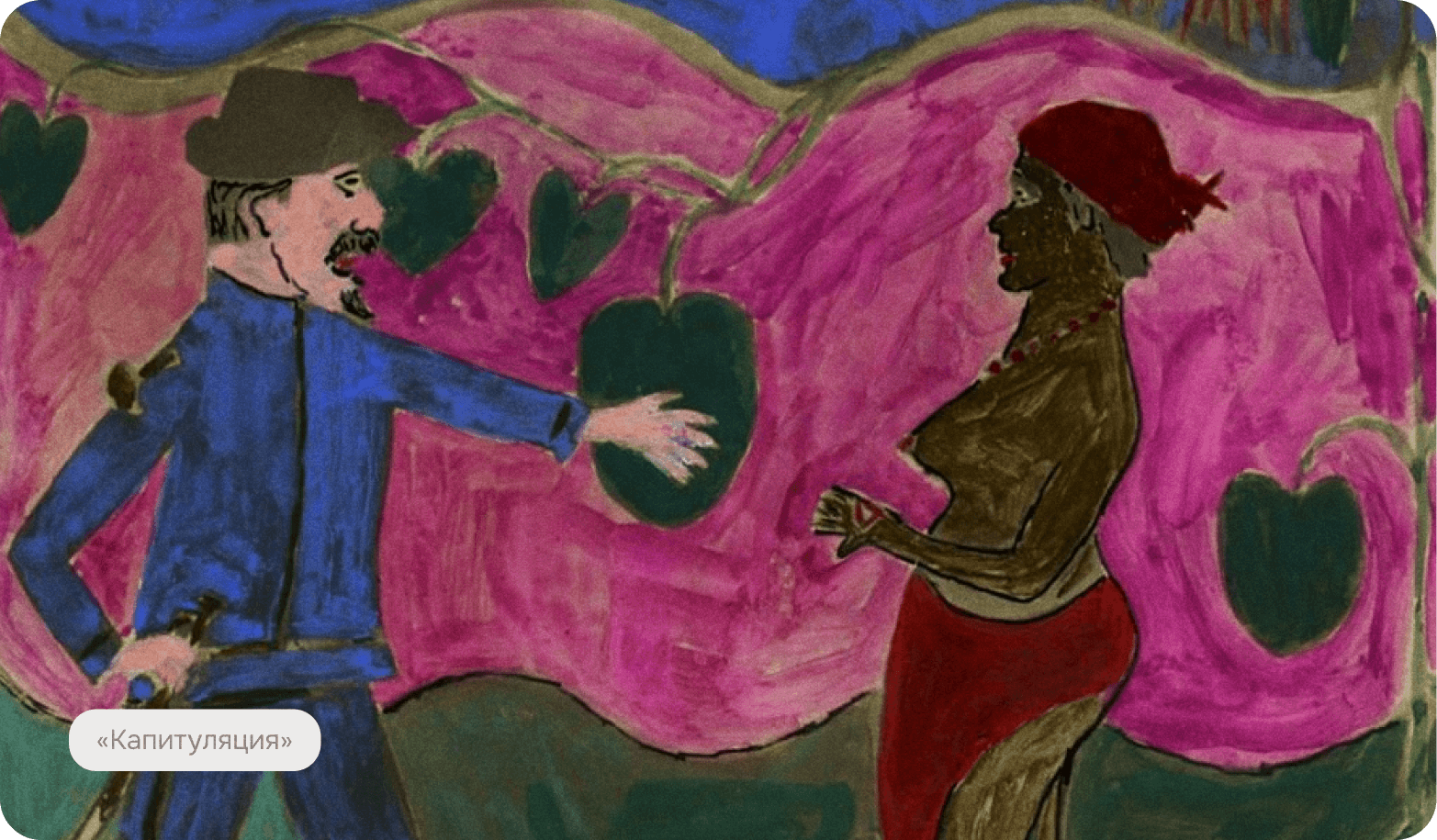
What do you think of the painting on this article’s cover? That it’s just a mess of paint and that anyone could have made it? The creator of the painting thought exactly the same thing. Seeking revenge on behalf of his wife, he accidentally invented Disumbrationism—a fictitious avant-garde art movement that became one of the most famous hoaxes in 20th-century painting.
The Roaring Twenties
After the First World War (then known as the Great War), traditional values in Europe underwent a profound devaluation. Faith in the old order and classical aesthetic norms was shaken, prompting artists to search for new forms capable of expressing trauma, chaos, absurdity, and the fragmentation of the world.
Following Europe’s lead, America also began exploring new directions in avant-garde art. After the Armory Show (New York, 1913), a distinctly American version of modernism started to emerge: the colorful urban fantasies of John Marin, the abstract symbolism of Arthur Dove, the futurism of Joseph Stella, the Dadaism of Man Ray, and the ready-mades of Marcel Duchamp.
Behind this artistic rebellion lay a rejection of established spiritual values, a spirit of nihilism, and a desire to shock the ordinary viewer. Every more-or-less original artist sought to create a unique style, manner, and artistic signature. By contrast, artists who adhered to traditional views and worked in a realistic style did not always receive support or recognition.
The same thing happened to Sara Bixby Smith, an amateur artist who painted realistic landscapes and portraits. The selection committee of an art exhibition that opened in Los Angeles in 1924 rejected several of her landscape paintings.
Sara was deeply upset by the decision and told her husband about it.
Revenge
Paul Jordan-Smith was far removed from the world of painting. He was an author and taught English and American literature at the University of California. However, he was convinced that the exhibition committee had rejected his wife’s paintings because they understood nothing about art, and he decided to prove it.
Paul borrowed his wife’s brushes and paints and, within a few hours, created a painting depicting a woman with a wreath on her head and a banana in her hand. He titled the work “Yes, We Have No Bananas”—after a jazz novelty song that was enormously popular in America at the time.
Soon afterward, Paul invited an art critic acquaintance to evaluate what he claimed was a recently acquired painting.
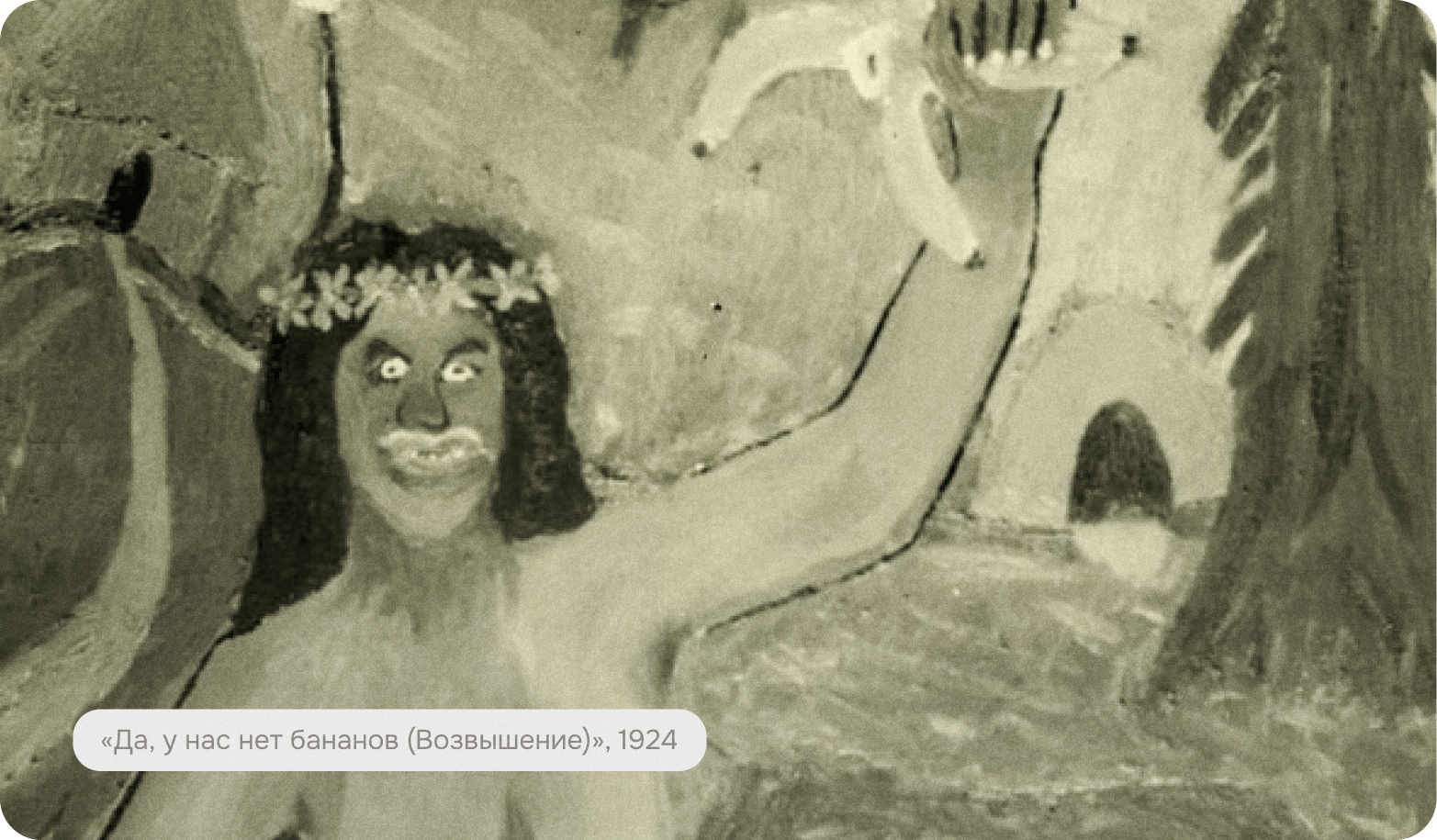
When asking for the critic’s opinion, Paul did not hide his skepticism and openly dismissed the painting as mere scribbling. To his surprise, however, the visitor disagreed.
The critic found the work quite intriguing and interpreted its manner of depicting figures and objects without the slightest trace of shadow as a bold new artistic movement.
Jordan-Smith was bewildered. He had not expected such an easy victory and decided to continue the game.
He adopted the pseudonym Pavel Jerdanowitch, presented himself as an independent artist and founder of the “Disumbrationist” school of painting (from the Latin dis + umbra, meaning “without shadow”), and submitted an application to a group of New York artists.
Renaming the banana painting “Exaltation,” Jordan-Smith entered it into an exhibition at the Waldorf-Astoria gallery in 1925.
There, the painting caught the attention of Count Chabrier, a French art critic and publisher. He later wrote to “Jerdanowitch,” asking for a photograph and biographical information for publication in the French art journal Revue du Vrai et du Beau (Review of the True and the Beautiful). Jordan-Smith gladly complied.

Instead of providing his real biography, Paul invented a new one. For the French audience, he presented himself as a native of Moscow whose parents had taken him to Chicago when he was a child. And, as if that were not eccentric enough, he also fabricated tales of travels to the South Sea islands and a life spent among indigenous tribes.
The Exposure
he article, which appeared in the September issue of Revue du Vrai et du Beau, was filled with praise for Pavel Jerdanowitch. Count Chabrier wrote:
“This artist possesses a highly distinctive manner of depicting people and objects, and he uses the brush to symbolize emotions. In this respect, he is at times somewhat literary and, not content with the purely plastic aspects of art, seeks to express psychology as well.”
Jordan-Smith later painted several more works, which also received enthusiastic reviews in both the American and French press. His style was described as “a delightful blend of Paul Gauguin, Pop Hart, and Black minstrel performers, infused with a great deal of Jerdanowitch’s own individuality.”
In just three years, an unknown literature professor had transformed himself into an artist whom some publications ranked alongside the finest avant-garde painters of the era.
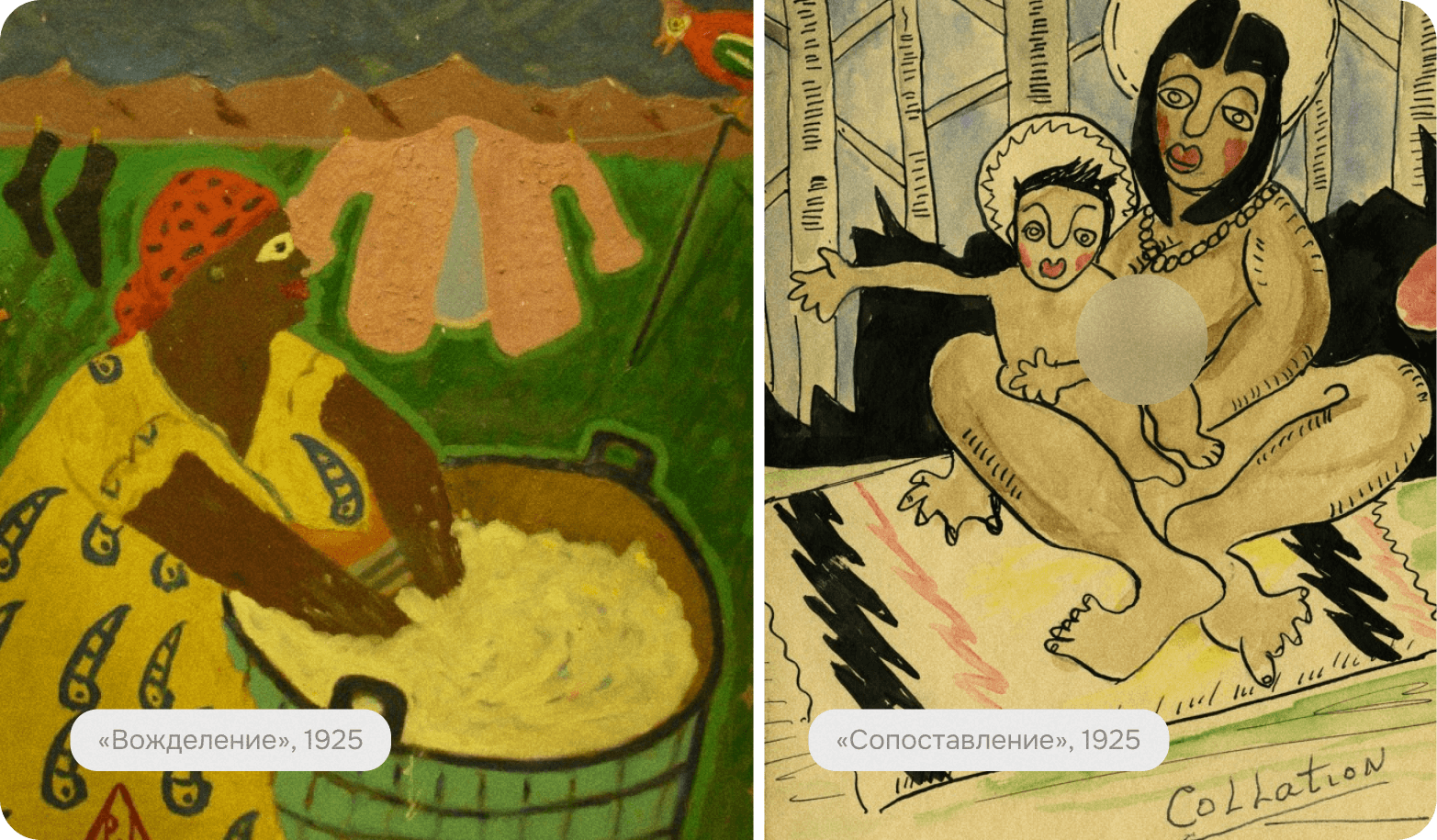
It would seem that Jordan-Smith could have continued exhibiting his hastily painted works in galleries and enjoyed a reputation as a great artist. As he later wrote in his book The Road I Came:
“I received more publicity from this little joke, which took me no more than an hour a year for the three years I kept it going, than from all the serious work I had ever done over many decades.”
Apparently, however, art never truly interested him that much. Besides, it was time to bring to completion the act of revenge he had once promised his wife.
In 1927, Jordan-Smith gave an interview to the Los Angeles Times in which he revealed the entire truth. The story became an international sensation.
Although the hoax had ended, critics continued to debate both Disumbrationism and the talent of “Jerdanowitch.” Some argued that Paul Jordan-Smith genuinely possessed artistic talent but, lacking formal training and refined artistic judgment, failed to recognize it himself. Others suggested that, as a man of letters, he had accurately grasped the broader trends shaping modern art and, even if in a caricatured and simplified form, had captured their essence in his paintings.
Whatever the case, his deception is still regarded as one of the most famous hoaxes in the history of modern art.